What are PFAS?
PFAS, or per- and polyfluoroalkyl substances, are a large group of human-made chemicals that have been used in various industries since the 1940s. These chemicals are characterized by a strong carbon-fluorine bond, making them highly resistant to heat, water, and oil. Because of these properties, PFAS have been widely used in products like nonstick cookware, waterproof clothing, food packaging, and firefighting foam. However, their durability also prevents them from decomposing—leading them to be known as “forever chemicals” because they also stick around in the environment and human body.
The health risks associated with PFAS exposure are serious and extensive. Research has linked these chemicals to a variety of adverse health effects, including liver damage, developmental delays in children, immune system suppression, and an increased risk of certain cancers, such as kidney and testicular cancer. Due to their ability to accumulate in the body over time, even small, prolonged exposures can have significant health consequences. PFAS are incredibly common, with studies showing that traces of these chemicals are found in the blood of nearly all Americans. They can also be detected in drinking water, soil, and air, often as a result of industrial use or environmental contamination.
The widespread presence of PFAS, combined with their dangerous health impacts, has prompted increased regulation and public concern. As more people become aware of these risks, many seek solutions to reduce exposure, such as filtering their water.
How do reverse osmosis systems work?
Reverse osmosis (RO) systems improve water quality by using a filtration process that forces water through a semipermeable membrane under high pressure. This membrane allows water molecules to pass through while blocking larger particles, contaminants, and dissolved substances, such as salts, bacteria, and chemicals. The high pressure helps push the water through the membrane, effectively removing impurities and leaving behind cleaner, purified water. The process results in safer water for consumption, as harmful substances are effectively separated and flushed away. Reverse osmosis is considered the most effective filtration method, capable of filtering out contaminants such as lead, VOCs, microplastics, fluoride, chlorine, and harmful chemicals like PFAS.
Do reverse osmosis systems remove PFAS?

RO systems are among the most effective technologies available for removing PFAS from water. RO membranes can achieve above a 99% rejection rate for various PFAS compounds, including both long-chain and short-chain variants.
The efficiency of RO systems in PFAS removal is attributed to their semi-permeable membranes, which allow water molecules to pass through while blocking larger PFAS molecules. This selective filtration process separates the contaminants to make water cleaner and safer. However, it's important to note that the performance of RO systems can be influenced by factors such as PFAS concentrations and the condition of the system. Therefore, proper system maintenance, including regular replacement of filters and the RO membrane is essential to sustain system effectiveness at removing PFAS.
What to know about reverse osmosis systems certified for PFAS removal
If you're shopping for an RO system to protect yourself from PFAS, it’s a good idea to look for systems that are certified for PFAS removal. Many RO systems are certified to NSF Standards 53 and 58, which specifically target PFAS chemicals. These certifications mean the system has been tested to reduce PFAS from your water. But here’s something to keep in mind: These certifications are still based on the EPA’s 2016 Lifetime Health Advisory (LHA) levels, which set higher acceptable levels of PFAS than recent guidelines.
In 2022, the EPA lowered the acceptable levels of PFAS in drinking water, and in April 2024, they rolled out their final National Primary Drinking Water Regulation (NPDWR), which set even stricter limits for several PFAS, bringing the allowable levels closer to zero. Today, NSF Standards 53 and 58 haven’t been updated to reflect these new rules just yet, but those updates are in progress. So for now, RO certifications for PFAS removal are based on the 2016 standards.
However, while certifications are being updated to the latest EPA rules, RO systems certified to NSF Standards 53 and 58 are still the best way to protect against PFAS. And once the standards are updated, you can expect even better protection in line with the new EPA guidelines.
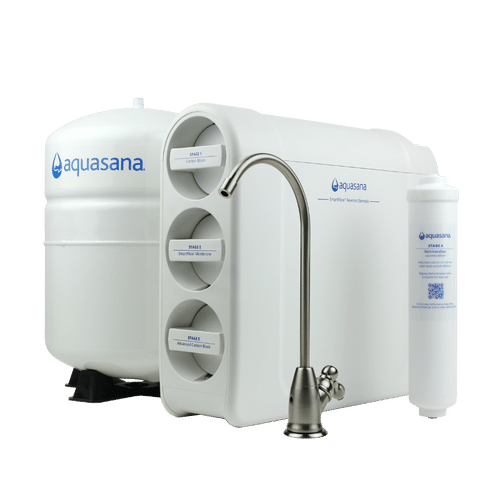
Shop Aquasana’s SmartFlow® Reverse Osmosis system
When looking for a water filter, choose systems certified to NSF/ANSI Standard 53 or 58 (for reverse osmosis) for effective PFAS removal. These certifications are based on 2016 EPA guidelines, but they remain the most reliable option for protecting against PFAS while new standards are being updated to reflect the EPA’s 2024 rule.
Aquasana’s SmartFlow® Reverse Osmosis system removes up to 99.99% of contaminants, including PFAS, and features a remineralizer to restore healthy minerals that many RO systems remove during the filtration process. Investing in an RO system can help remove PFAS, just make sure to choose the right option for your home.
UNDER SINK WATER FILTER
SmartFlow® Reverse Osmosis
High-efficiency reverse osmosis system removes up to 99.99% of 90 contaminants, including fluoride, arsenic, chlorine, and lead.