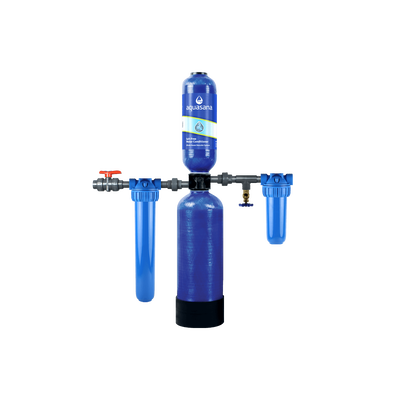
How often should you add salt to a water softener?
You should check your water softener’s brine tank about once a month and add more salt when the level drops below roughly half full. Some newer or more efficient systems may only need salt added every 6–8 weeks, while homes with very hard water or higher water usage may need refills more often. The right refill schedule ultimately depends on your household’s water use, water hardness level, system size, and how frequently the unit regenerates.
Signs your water softener needs more salt
Your water softener usually won’t stop working immediately when salt levels get low. Instead, you may start noticing small signs that the system is no longer regenerating as effectively as it should.
- You can see water sitting above the salt level in the brine tank
- Hard water signs start coming back, like spots, scale, or soap scum
- Water feels less soft than usual
How much salt does a water softener need?
The amount of salt your water softener needs depends on the size of the brine tank, your household’s water usage, and how often the system regenerates. Homes with harder water or higher daily water use will typically go through salt more quickly than smaller households with lower water demand.
In most cases, the goal is to keep the brine tank about half full and always above the water level so the system can regenerate properly. At the same time, it’s usually best not to completely overfill the tank, since excessive salt buildup can sometimes contribute to issues like salt bridging or crusting over time.
What happens if you don’t add salt on time?
If your water softener runs out of salt, the system may stop regenerating properly, which means hard minerals can start passing back into your home’s water. Over time, you may begin noticing hard water signs returning, including spots on dishes, soap scum buildup, scale around fixtures, or water that no longer feels as soft as usual. Consistently low salt levels can also reduce the overall effectiveness of the system and affect softening performance over time.
What kind of salt should you use in a water softener?
There are several types of water softener salt available, and the best option for your system depends on your manufacturer’s recommendations, water conditions, and maintenance preferences.
- Salt pellets: One of the most common options for water softeners because they’re designed to dissolve evenly and help reduce buildup in the brine tank.
- Solar salt crystals: Made from evaporated seawater, these crystals are a more natural option but may sometimes leave behind more residue than pellets.
- Evaporated salt: A highly purified salt option that dissolves cleanly and helps reduce buildup, though it’s usually the most expensive option.
- Potassium chloride: A sodium-free alternative to traditional softener salt that can be used in some systems, though it’s more expensive.
Common salt tank problems to watch for
Low salt levels aren’t the only thing that can affect your water softener’s performance. Over time, buildup and hardened salt inside the brine tank can interfere with proper regeneration, even if the tank still appears full at first glance.
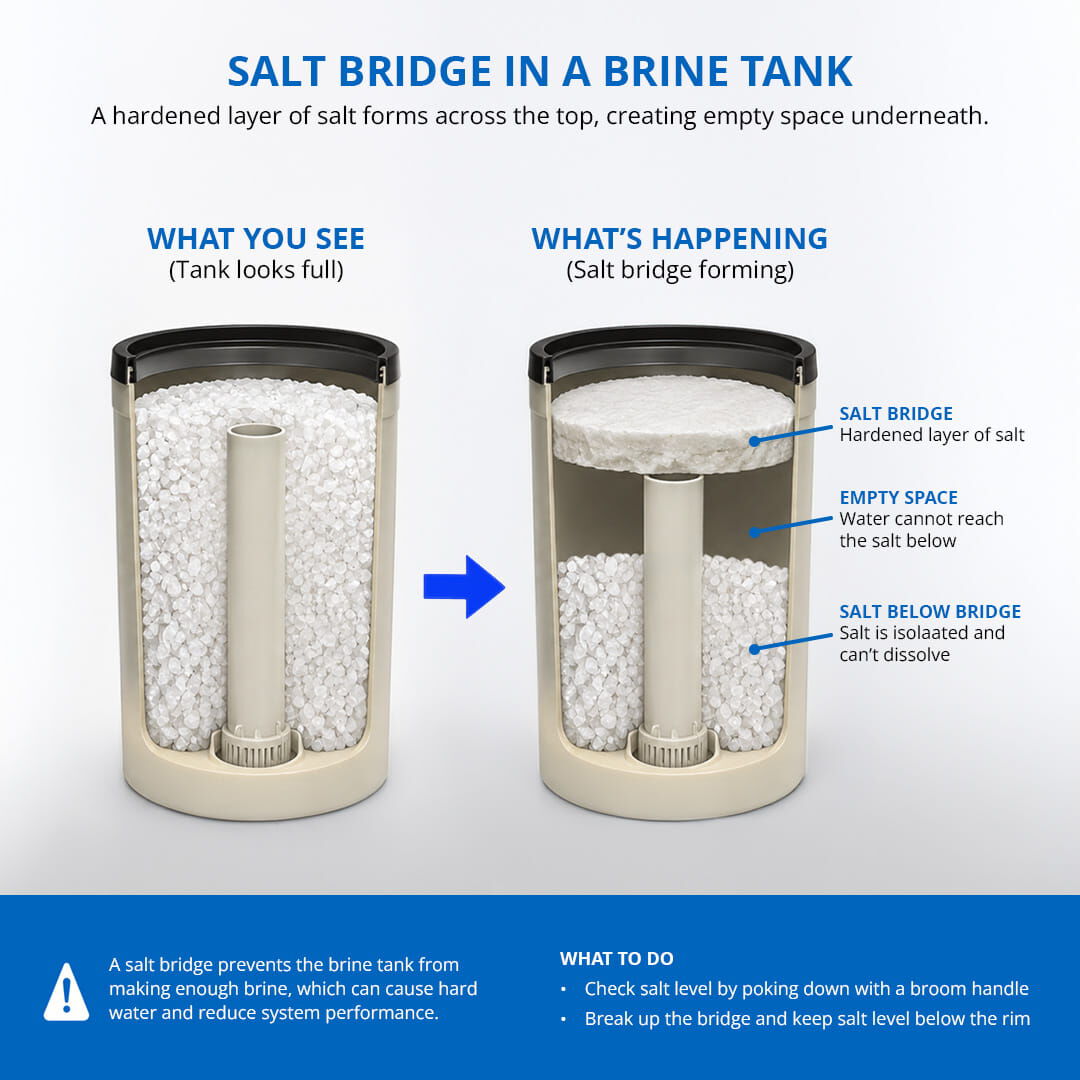
Salt bridging
A salt bridge is a hardened layer of salt that forms inside the brine tank, creating empty space underneath, even though the tank may still look full from above. This can prevent the water softener from creating the proper brine concentration needed for regeneration.
Salt buildup or crusting
Over time, salt can stick to the sides of the brine tank or form crusty buildup inside the system. That’s why it’s important to occasionally check the tank manually and break up buildup if needed, rather than relying on how full the tank looks from the top.
Shop Aquasana solutions for hard water
Keeping up with your water softener’s salt levels can help your system continue regenerating properly to prevent hard water issues like spots, scale, and soap scum. While most homeowners should check the brine tank about once a month, the right refill schedule ultimately depends on your home’s water hardness, water usage, and system size. Paying attention to salt levels and common tank issues like bridging or crusting can also help keep your system performing at its best.
Aquasana offers water softeners designed for homes that need traditional hard water treatment and mineral reduction. For homeowners looking for scale protection with less ongoing maintenance, our Salt-Free Water Conditioner is an alternative option that helps reduce scale buildup without requiring salt refills. Shop our complete catalog of hard water solutions to find the right fit for your home and water needs.
WHOLE HOUSE
SimplySoft® 40,000 Grain Softener
Reduces minerals that cause hard water, providing softer, scale-free water from every tap in your home.
.png)