Why it's important to filter well water
Unlike city water, which is monitored and treated by local municipalities, well water is the homeowner’s responsibility. This involves regularly testing, maintaining, and filtering it to ensure it remains clean and safe. Because well water comes directly from the ground, it’s affected by the minerals and materials in the surrounding soil, as well as agricultural runoff, septic systems, and other environmental factors.
Without the protection of municipal treatment, even private wells in remote or rural areas can be at risk of contamination. In fact, the CDC reports that one in five private wells in the United States contains at least one contaminant above health-based standards. Regular testing and a reliable, well water filtration system are crucial for maintaining the health of your household’s water.
Common contaminants found in well water include:
- Iron and manganese: Cause staining and metallic tastes.
- Sediment and silt: Make water appear cloudy and can damage plumbing.
- Bacteria and microorganisms: Spread waterborne diseases and cause illness.
- Nitrates and nitrites: Often from fertilizer runoff, posing health risks if consumed in high levels.
- Heavy metals (lead, arsenic, mercury): Naturally occurring in soil and rock, but exposure can damage the body and is associated with health risks.
Filtering well water helps protect your home, plumbing, and health by removing these impurities before they reach your tap. A properly chosen water filter for well water ensures your water not only tastes better but also supports a safer, cleaner lifestyle for your entire household.
How to test well water for contaminants
Testing your well water is the first step in finding the filtration system that best fits your needs. The CDC recommends testing private wells at least once a year for bacteria, nitrates, and any other local concerns. You can purchase an at-home water test kit for quick screening or send a sample to a certified laboratory for a more detailed analysis. Professional lab tests can identify a wider range of contaminants, including heavy metals, minerals, and organic compounds. If your test results show elevated levels of any contaminant, it’s important to address the issue quickly with the right filtration system or treatment solution to ensure your water remains safe.

Types of water filtration systems for well water
Every well is unique, and so are its filtration needs. Depending on what your water test results show, you may need a single filter type or a combination of systems to achieve the best protection and quality. Here’s a breakdown of the most common well water filtration systems and what each one does best.
1. Whole house well water filtration system
A whole house well water filtration system filters water as it enters your home, so every tap delivers filtered water. These systems are designed to tackle common well contaminants like sediment, iron, and sulfur odors while improving taste, odor, and overall clarity.
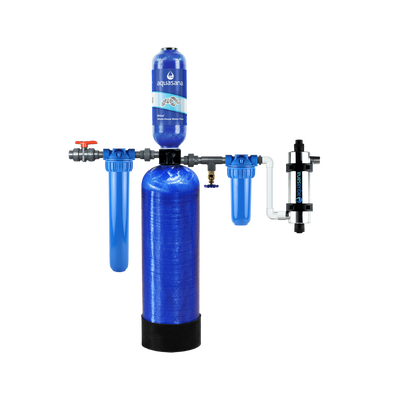
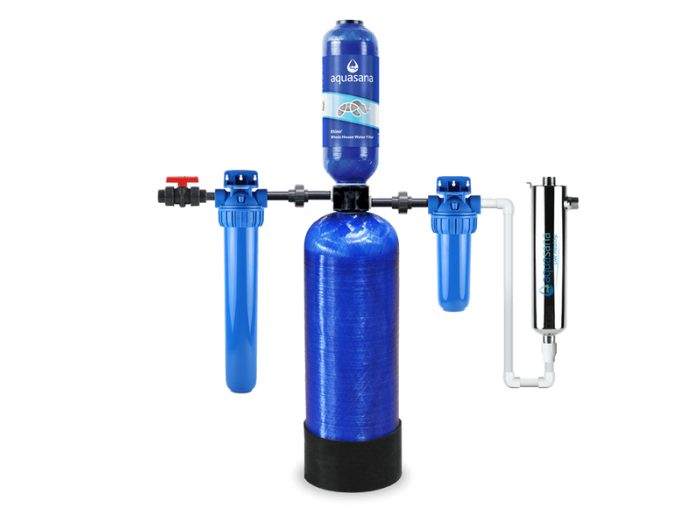
They’re ideal for homeowners who want complete coverage and long-term performance. A high-quality model, like Aquasana’s Rhino® Well Water with UV, combines multiple filtration stages to address sediment, chemical contaminants, and microorganisms at once. It’s one of the most comprehensive ways to protect your health.
WHOLE HOUSE WATER FILTER
Rhino® Well Water with UV
Whole house filtration system protects from bacteria, viruses, cysts and other contaminants commonly found in well water. Lasts for 5 years or 500,000 gallons.
2. Reverse osmosis system
A reverse osmosis (RO) system is one of the most effective options for filtering drinking water. It uses a semipermeable membrane to remove dissolved solids and microscopic contaminants such as arsenic, lead, fluoride, and nitrates.
RO systems are usually installed under the sink and work best as point-of-use filters, meaning they filter water at the point where you use them. This is beneficial if you have older plumbing in your home that contains lead, as filtered water from a whole house system could be recontaminated as it travels through your pipes — whereas a point-of-use filter would add an extra layer of protection right before it comes out of the tap. However, you’ll only have filtered water where RO systems are installed, which is why it’s ideal to pair an RO system with a whole house well water filter.
3. Sediment filter
A sediment filter is one of the simplest yet most essential components of a well water filtration system. It traps large particles like sand, silt, and rust that can make water cloudy and damage plumbing or appliances. By capturing these visible impurities early, sediment filters help extend the life of other filters and improve system performance. However, a sediment filter alone won’t remove chemical contaminants, bacteria, or metals, so it’s best used as a pre-filter within a more comprehensive setup, especially for wells that draw from sandy or mineral-rich aquifers.
4. UV filter
A UV (ultraviolet) filter disinfects water using ultraviolet light to neutralize microorganisms such as bacteria, viruses, and parasites. UV filters are most effective when used alongside another filtration method, since they don’t remove sediment or chemical pollutants. For best results, water should pass through a sediment pre-filter within a whole house system before reaching the UV unit.
5. Water Softener
A water softener targets one of the most common well water issues — hardness. It works through ion exchange, replacing calcium and magnesium minerals with sodium or potassium to prevent scale buildup. Hard water can leave spots on dishes, make soap less effective, and shorten the lifespan of appliances. Softened water, on the other hand, is easier on skin and hair, keeps clothes brighter, and helps plumbing and appliances run more efficiently.
While a softener effectively helps with hard water, it doesn’t remove contaminants like bacteria, metals, or sediment. The best approach is to combine a water softener with a well water filtration system to ensure your home’s water is both gentle and clean. Together, they deliver the full package — comfort, protection, and long-term performance.

Shop Aquasana’s Rhino® Well Water with UV
When it comes to protecting your home’s well water, a standard filter often isn’t enough. That’s why Aquasana designed the Rhino® Well Water with UV, an all-in-one system built to handle the unique challenges of private wells. This comprehensive setup combines multiple stages of filtration, including sediment, activated carbon, and a powerful UV purifier, to make water safer while improving taste, clarity, and odor.
The Rhino® Well Water with UV delivers long-lasting performance and healthy water from every tap, offering peace of mind for you and your family. It’s engineered for durability and easy maintenance, so you can enjoy up to five years or 500,000 gallons of reliable filtration before needing a replacement.
With Aquasana, you never have to choose between safety and convenience. The Rhino® Well Water with UV makes it simple to get healthy, great-tasting water straight from your well, no matter what’s flowing beneath your home.