What are PFAS?
PFAS, short for per- and polyfluoroalkyl substances, are a large group of synthetic chemicals that were heavily used in consumer and industrial products. They're commonly found in items like nonstick cookware, grease-resistant food packaging, stain-resistant fabrics, and firefighting foam because they resist heat, water, and oil.
However, those same properties also make PFAS extremely resistant to decomposition. Because they break down slowly, they can accumulate in water supplies, wildlife, and the human body over time. Research has linked exposure to certain PFAS with potential health concerns, including increased cholesterol levels, decreased immune response, developmental effects, and an increased risk of some cancers.
Do you actually need to test your water for PFAS?
Testing for PFAS can be expensive, so it isn't necessary for every household. Whether it's worth testing often depends on where your drinking water comes from and whether PFAS monitoring is already available.
- Public/city water: If your home is served by a public water system, your utility is required to monitor and report PFAS levels. Before paying for a test, check your utility's annual Consumer Confidence Report (CCR) to see if PFAS have already been detected in your area.
- Private well: Unlike public water systems, private wells aren't routinely monitored or regulated, making well owners the most likely to benefit from testing their water for PFAS, especially if they live near potential sources of contamination.
You may also want to consider testing if your home is located near an airport, military site/base, industrial manufacturing facility, landfill, wastewater treatment plant, or other areas historically associated with PFAS contamination.
How to test for PFAS in your water at home
There isn't a reliable instant test strip or handheld device that can detect PFAS in your water on the spot. When people refer to at-home PFAS testing, they usually mean collecting a water sample at home and mailing it to a certified laboratory for analysis. While the sample collection happens at home, the actual testing must be performed in a lab using specialized equipment. Depending on your situation, there are three ways to test your water for PFAS.
1. Check public water quality reports
If your home is served by a public water system, start by reviewing your utility's annual Consumer Confidence Report (CCR) or searching a public resource like the EWG Tap Water Database. These free resources may already show whether PFAS have been detected in your drinking water and to what extent, saving you the cost of additional testing.
2. Use a mail-in lab test kit
You can also order a mail-in PFAS test kit, collect a water sample by following the instructions provided, and send it to a certified laboratory for analysis. Test kits vary in cost, the number of PFAS compounds they measure, and the testing methods they use, so look for one that analyzes samples using an EPA-approved method.
3. Hire a state-certified lab
For the most accurate results, you can work directly with a state-certified laboratory. This option is especially helpful for private well owners, situations where PFAS contamination is a concern, or when you need official documentation, and some state or local health departments offer free or discounted testing programs for well owners.
How to read your PFAS test results
PFAS test reports can feel intimidating because they often contain multiple chemical names, detection limits, and concentration measurements. Understanding a few key terms can make it much easier to interpret the results.
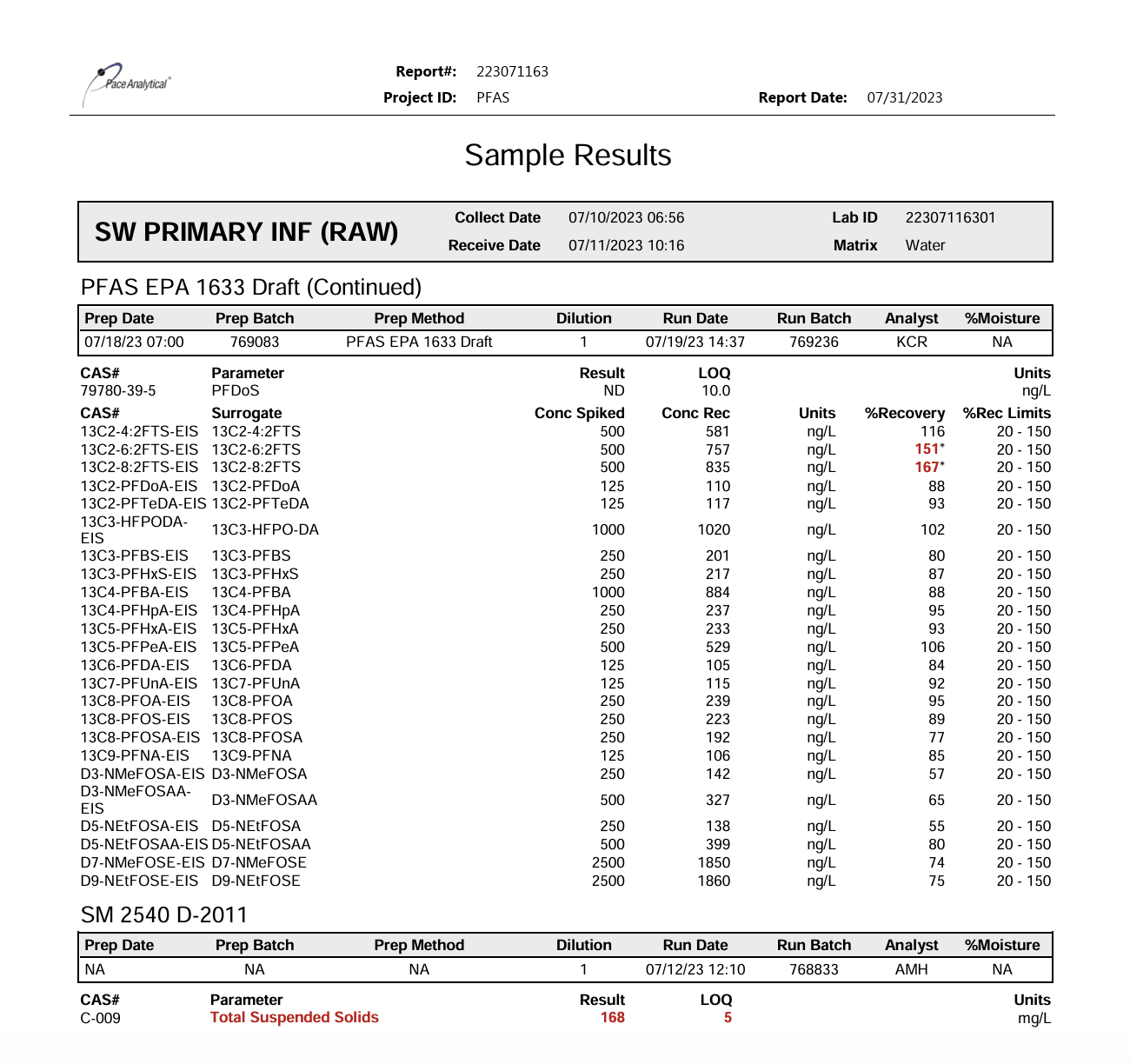
Your test results will list all the PFAS compounds that were tested, followed by the result. If you see "non-detect" (ND) on your report, it means the lab did not detect that specific PFAS above its reporting or detection limit. It doesn't necessarily mean the compound is completely absent, only that it wasn't found at a measurable level using that testing method.
If you see a number in the result field, it indicates that the PFAS compound was found, and the number indicates the concentration, which is defined by units. In this case, the PFAS compound PFOS shows a result of 10.1 ng/L, indicating PFOS was found at a concentration of 10.1 nanograms per liter in the sample — more than double the EPA’s Maximum Contaminant Level (MCL) of 4.0. While the concentration of PFOS significantly exceeds the EPA’s MCL, that isn’t the case for every contaminant. For example, PFBS shows a concentration of 11.5 ng/L, which is far below the 2,000 ng/L health advisory limit from the EPA.
With this in mind, you should compare each detected PFAS compound to the current U.S. Environmental Protection Agency (EPA) drinking water standards to see if detected levels are above or below recommended limits. If you're unsure how to interpret the report, consider contacting your testing agency, local water utility, or state health department for guidance.
What to do if PFAS are in your water
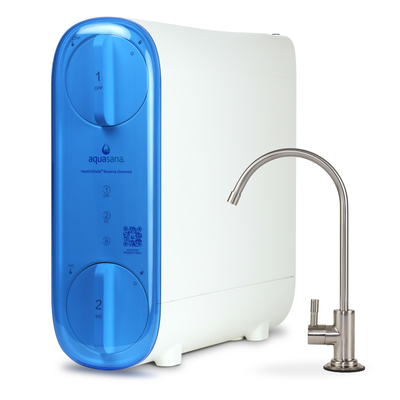
Finding PFAS in your water doesn't necessarily mean you need to replace your water source. The right water filtration system can significantly reduce many PFAS compounds and help improve your drinking water quality. Reverse osmosis (RO) systems are among the most effective options because they force water through a semipermeable membrane that removes a wide range of contaminants, including many PFAS.
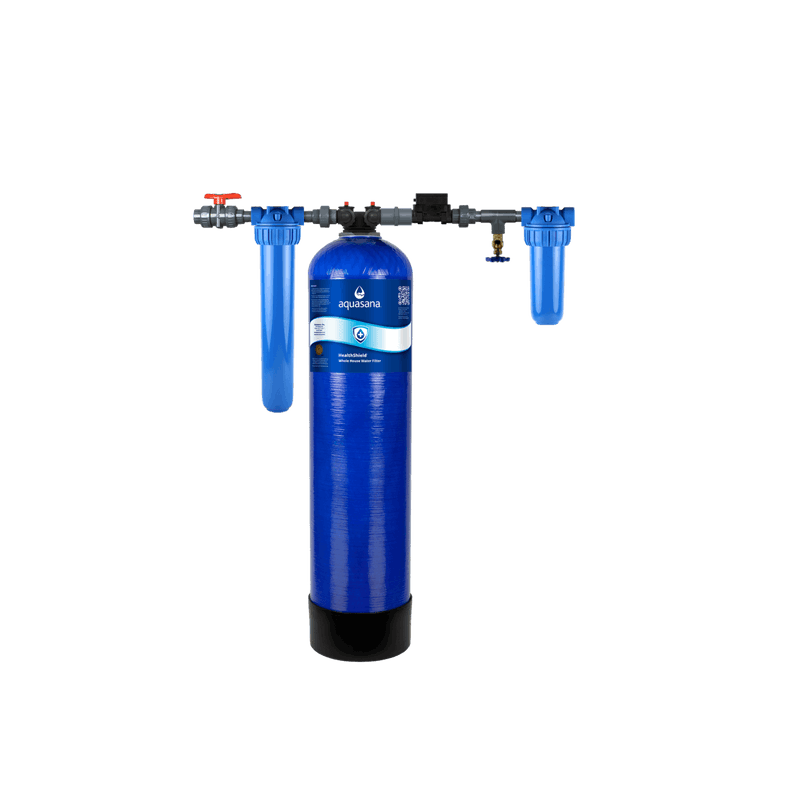
For homeowners who want filtered water throughout the house, some whole house systems can help reduce PFAS and other contaminants before water reaches every faucet and fixture. Our new HealthShield™ system is certified to reduce 99.9% of 61 contaminants including PFAS compounds like PFOA, PFOS, PFNA, PFHxS, and PFHpA.
WHOLE HOUSE
HealthShield™
The first whole home filtration system to reduce up to 99.9% of 61 contaminants including PFAS*, VOCs, pharmaceuticals, chlorine, and chloramines for healthier water from every tap.