The mission behind this survey
The annual Aquasana Water Quality Survey explores Americans’ knowledge, habits, and concerns when it comes to their drinking water. Our goal is to shed light on important water quality issues and help guide people toward trustworthy, effective filtration solutions.
Each year, our data highlights important gaps in water education, but it also shows movement in the right direction. In 2026, 60% of Americans selected filtered water sources as the most trustworthy option for clean drinking water, the highest percentage we’ve seen since the survey began:
- 2019: 50%
- 2020: 51%
- 2021: 53%
- 2022: 53%
- 2023: 49%
- 2024: 56%
- 2025: 59%
- 2026: 60%
The growth suggests that more people understand the value of filtering water at home rather than relying solely on bottled water or unfiltered tap water. Still, as concern over emerging contaminants rises, our survey shows there is more work to do when it comes to helping consumers understand what may be in their water and how they can take action.
The contaminants Americans are worrying about most in 2026
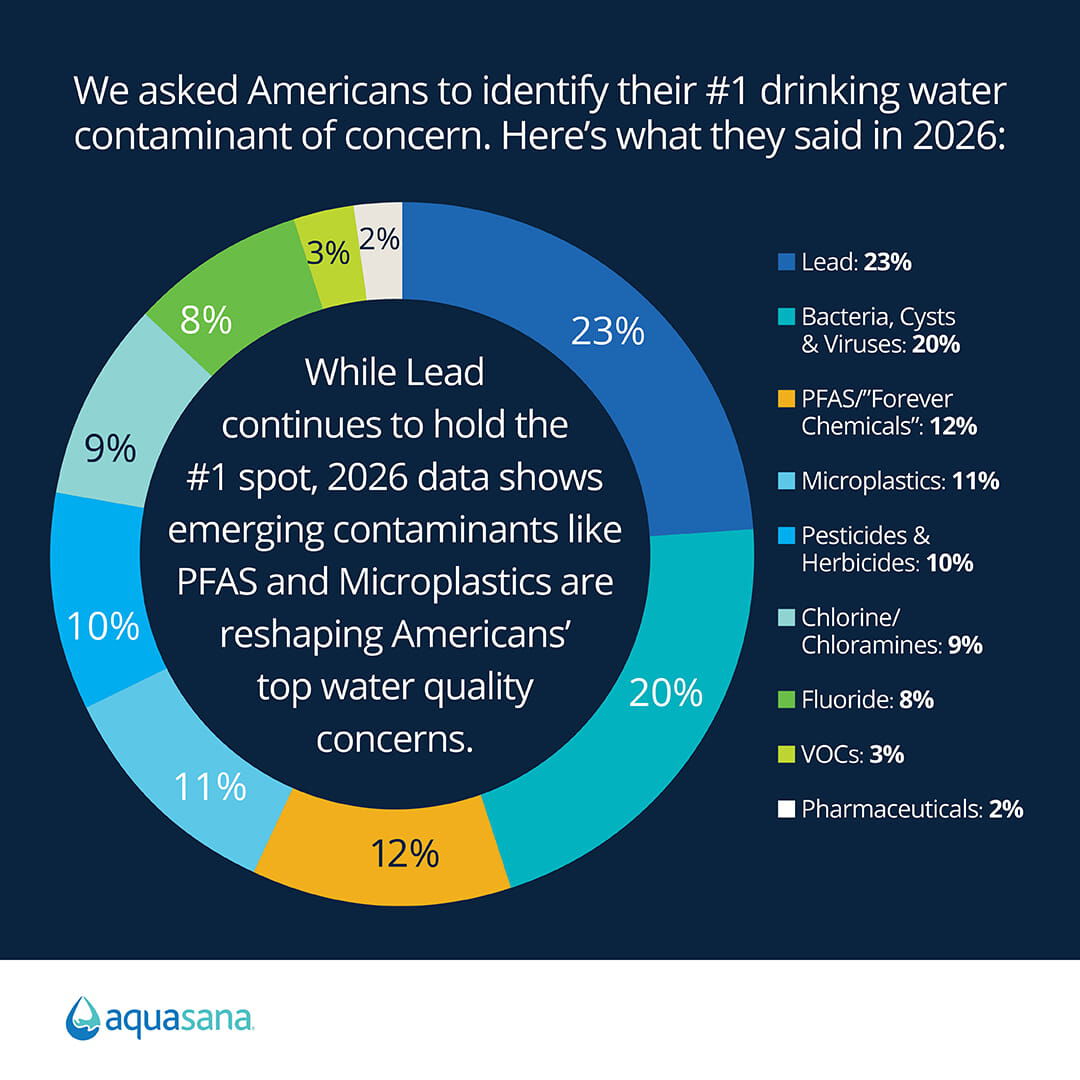
Lead remains Americans’ top water contaminant of concern in 2026, with 23% of people naming it their most worrisome contaminant — though that figure declined from 26% in 2025. Bacteria, cysts, and viruses held the second spot at 20%, also declining year-over-year from 23% in 2025.
These contaminants have consistently remained among the top water quality concerns in the U.S., but this year’s data suggests that emerging contaminants like PFAS and microplastics are reshaping Americans’ top water quality concerns.
Here’s how Americans ranked their top contaminants of concern in 2026:
- Lead: 23%
- Bacteria, cysts, and viruses: 20%
- PFAS or “forever chemicals”: 12%
- Microplastics: 11%
- Pesticides and herbicides: 10%
- Chlorine and chloramines: 9%
- Fluoride: 8%
- VOCs: 3%
- Pharmaceuticals: 2%
Lead and bacteria, cysts, and viruses continue to deserve serious attention. However, the year-over-year increase in concern about PFAS and microplastics shows Americans are becoming more aware of contaminants that are harder to see, taste, or smell, and often harder to understand.
Microplastics
Microplastics are tiny plastic particles that come from the breakdown of everyday plastic products, including bottles, packaging, bags, food storage containers, clothing fibers, and more. As plastic breaks down, microplastic particles enter the environment including rivers and lakes, but they can also contaminate bottled water from the breakdown of the bottle itself over time.
While scientific research on the overall impact of microplastics on human health is still developing, current evidence suggests several negative health effects including damage to the intestines and respiratory system.
Americans are increasingly concerned about microplastics exposure, but most still turn to bottled water
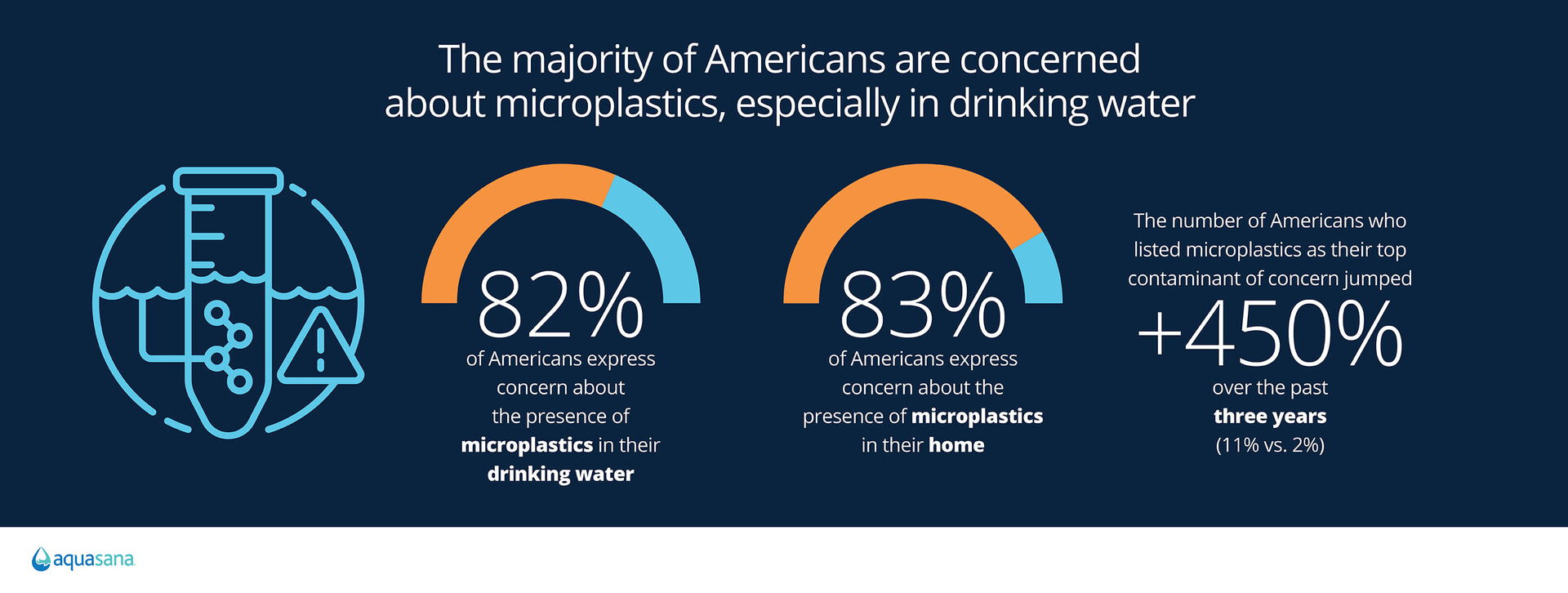
In 2026, 11% of Americans selected microplastics as their top water contaminant concern, up from 10% in 2025 — indicating growing concern over the contaminant. While only 1 in 10 Americans label microplastics as their top concern, 82% of Americans express concern about the presence of the contaminant in their drinking water and 83% of Americans express concern about the presence of it in their home.
At the same time, many Americans continue to trust and rely on bottled water. We found that nearly three-quarters (71%) of Americans are aware that bottled water can contain microplastics, yet a staggering 84% of Americans still turn to single-use plastic bottles for drinking water, with 68% reporting they still drink bottled water on a weekly basis. Additionally, 33% of Americans listed bottled water as their most trustworthy source of clean drinking water.
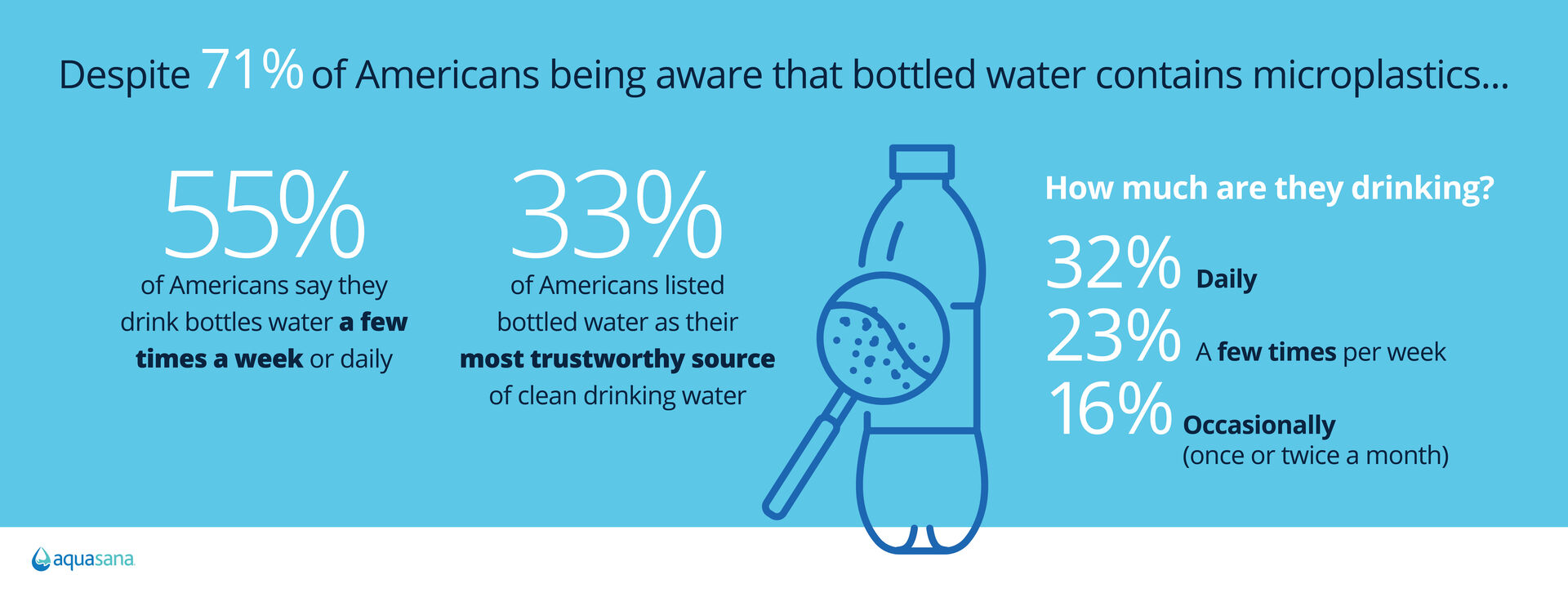
This disconnect shows that while Americans are increasingly aware of microplastics as well as the fact they’re found in bottled water, many still may not know how to reduce potential exposure. To help limit microplastics intake, you can cut back on single-use plastic bottles, avoid heating food or drinks in plastic containers, choose reusable glass or stainless steel bottles, and filter your drinking water at home. While microplastics are difficult to avoid entirely, small changes like these can help reduce exposure and consumption — especially when paired with a certified home filtration system.
PFAS/ "Forever Chemicals"
PFAS, short for per- and polyfluoroalkyl substances, are a group of man-made chemicals commonly called “forever chemicals” because they do not break down naturally in the environment. These chemicals have been used in products designed to resist water, oil, grease, and heat, such as nonstick cookware, stain-resistant fabrics, water-repellent clothing, food packaging, and firefighting foams.
Because PFAS don’t break down easily, when products made with PFAS are thrown out, the particles can leach into soil and water, leading to contamination. Health risks of PFAS are well documented, as exposure has been linked to effects on the immune system, thyroid, liver, and certain cancers.
Public concern over PFAS exposure reaches an all-time high
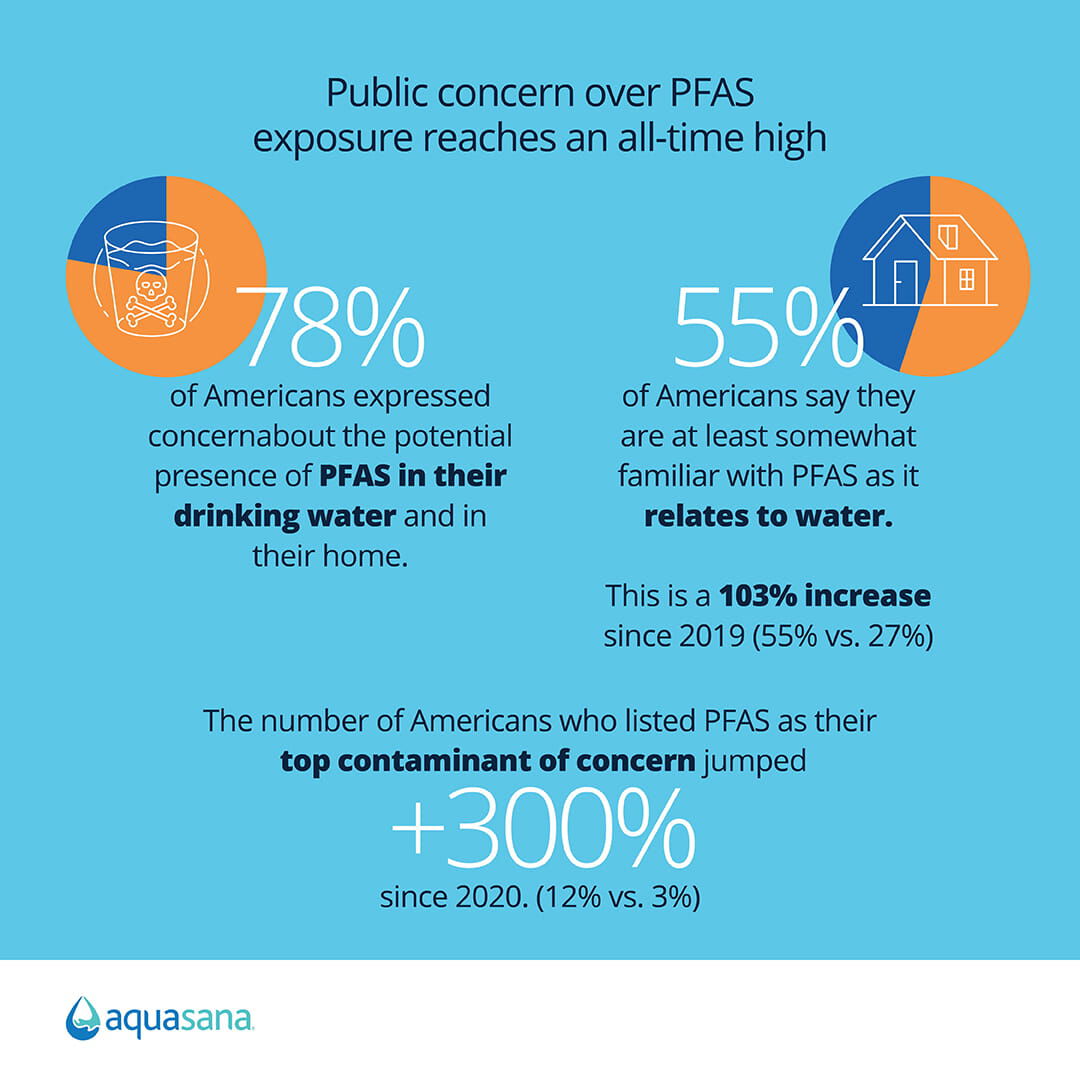
Our survey data shows that concern is rising. PFAS continued to hold the #3 spot on Americans’ list of top drinking water contaminant concerns, and the percentage of people who selected PFAS as their top concern increased from 11% in 2025 to 12% in 2026.
When asked more directly about PFAS exposure, concern was even higher. In 2026, 78% of U.S. adults expressed concern about the potential presence of PFAS in their drinking water, and 78% expressed concern about the presence of PFAS in their home.
Awareness is also increasing. More than half (55%) of Americans say they are at least somewhat familiar with PFAS as it relates to water. That’s more than double the percentage who said the same in 2019 (27%), showing that Americans are becoming much more familiar with forever chemicals and the risks they pose.
Federal attention around PFAS has also continued to evolve. In 2024, the EPA finalized the first national, legally enforceable drinking water standards for several PFAS. In 2026, the agency announced proposed updates related to PFAS standards and compliance timelines.
For consumers, the takeaway is clear: PFAS are no longer a niche water quality topic, they’re now one of the leading contaminants Americans worry about most. Even with growing federal efforts to reduce PFAS in tap water, Americans may want to take additional measures to safeguard their drinking water.
Most Americans are unfamiliar with VOCs, yet still concerned about exposure
Volatile organic compounds, or VOCs, are chemicals that can be found in products like paints, cleaning supplies, solvents, fuels, pesticides, and building materials.
Although VOCs are often discussed in relation to indoor air quality, they can also be a drinking water concern, as the contaminant can enter water supplies through industrial pollution, spills, leaking storage tanks, or groundwater contamination.
Depending on the compound and level of exposure, VOCs can be associated with short- and long-term health concerns, including nervous system effects, liver or kidney issues, and cancer risk.
Our 2026 survey suggests that VOCs aren’t well understood by the general public, but people are still concerned about the possibility of exposure. While only 37% of Americans say they’re familiar with VOCs, 61% said they’re concerned about the presence of VOCs in their drinking water and 63% expressed concern about the presence of VOCs in their home.
This is another example of a knowledge gap when it comes to drinking water quality. VOCs ranked lower on the list of top contaminant concerns, with only 3% of Americans selecting them as their top contaminant concern, but when asked directly, the majority still expressed concern. That suggests Americans are concerned about drinking water contamination — even when they’re not familiar with specific contaminants.
Americans express high concern, but low confidence in US drinking water standards
In the U.S., public water systems are regulated under the Safe Drinking Water Act. The EPA sets legally enforceable National Primary Drinking Water Regulations for certain contaminants that affect public health, and public water utilities are required to monitor for regulated contaminants, treat water, and share annual water quality reports with customers.
These standards play an important role in protecting public health, but they don’t cover every contaminant. Some contaminants are regulated, some are under review, and others are still being studied. Private wells are also not regulated, which means homeowners with well water are responsible for their own testing and treatment.
The contaminants discussed in this year’s survey show how varied the regulatory landscape can be. Lead and VOCs have long been recognized as drinking water concerns. PFAS are receiving more attention as research and regulation continue to evolve. Microplastics, meanwhile, are an emerging contaminant that many Americans worry about but are still being studied to better understand their prevalence and health effects.
This complexity helps explain why Americans are concerned about tap water, but not fully confident in the systems designed to regulate it. In 2026, 82% of Americans expressed concern about the quality of unfiltered tap water in their home. At the same time, 76% express a lack of confidence in the federal standards used to regulate drinking water safety in the U.S, and 10% said they’re not familiar with the federal standards at all.
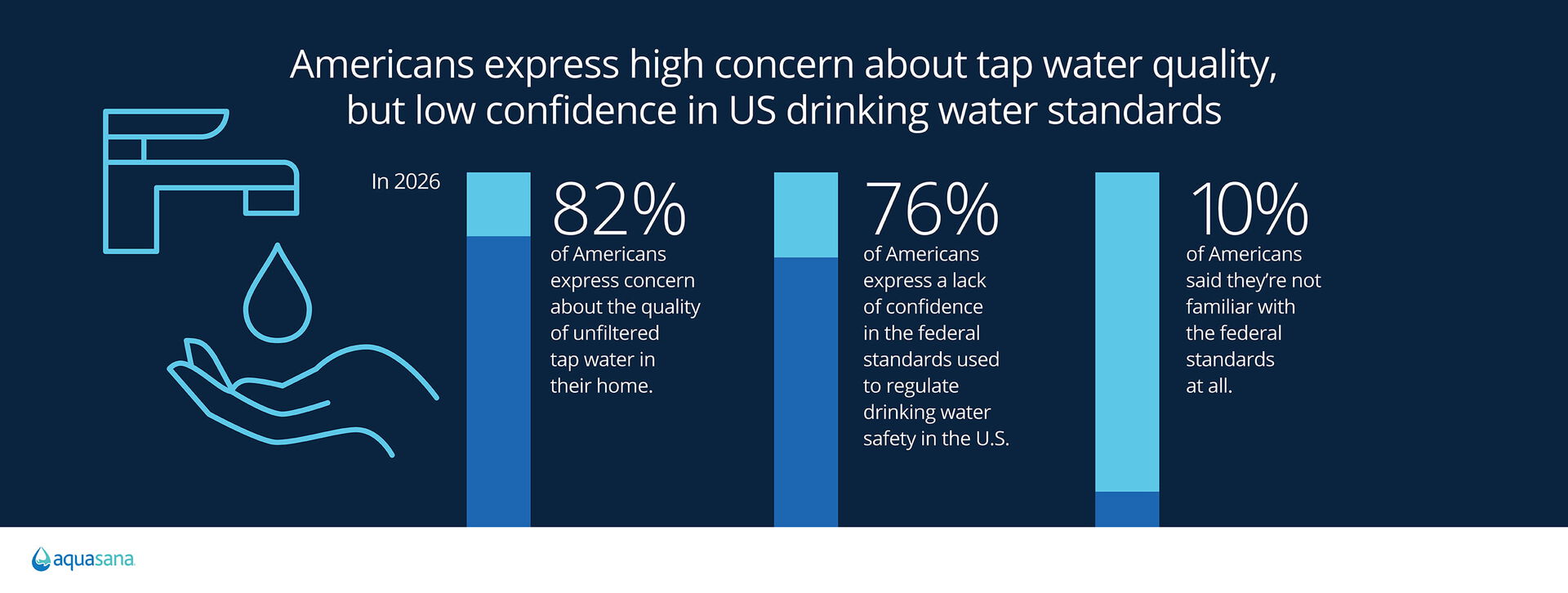
An overwhelming majority of Americans are concerned about the quality of their home’s water but don’t have confidence in the federal standards meant to ensure its safety. It’s understandable, given standards vary by contaminant and evolve over time — so it’s hard to know if current regulations are up to date with the latest research on suggested exposure limits. As a result, many Americans turn to bottled water or filtration as a means to safeguard against contaminants, with 76% of American adults agreeing with the statement that “Drinking cleaner, filtered water is important for living a longer and healthier life.”
Turning concern into action: Why filtration is a key step for water confidence at home
Despite bottled water’s popularity, both tap and bottled water can contain unwanted contaminants, including PFAS, lead, microplastics, VOCs, and more. While bottled water may feel like an easy solution, it can be costly, inconvenient, and contributes to plastic waste. It also contains over 2,000% more microplastics than tap water, which is one of the very contaminants Americans are increasingly trying to avoid.
Using a trusted water filtration system at home adds a critical layer of protection. It gives households more control over the quality of the water they use for drinking, cooking, and preparing meals.
However, not all filters and brands are created equal. When choosing a water filter, it’s important to look for systems that are independently tested and certified to NSF/ANSI standards to reduce the contaminants that matter most to your household. Performance data sheets and certifications can help you understand which contaminants a filter reduces, and to what extent.
At Aquasana, we offer a wide selection of high-performance water filters designed to tackle contaminants including lead, PFAS, microplastics, VOCs, chlorine, pesticides, herbicides, pharmaceuticals, and more.
As concern about emerging contaminants grows, we remain committed to developing filtration solutions that help you feel more confident in your home’s drinking water. We’re continuing to improve our systems and develop new solutions to make water filtration more effective, convenient, and accessible for everyone.
Conclusion
The 8th annual Aquasana Water Quality Survey revealed that Americans remain highly concerned about the quality of unfiltered tap water in their homes, with rising attention on microplastics and PFAS. At the same time, many Americans still turn to bottled water, even as awareness grows around the potential presence of microplastics in bottled water. This contradiction is one of the clearest takeaways from this year’s data.
This year’s findings also show a broader confidence gap. While federal drinking water standards play an important role in protecting public health, more than three-quarters of Americans lack confidence in the standards used to regulate drinking water safety in the U.S. For many households, that uncertainty reinforces the need for filtration solutions.
At Aquasana, we offer filtration solutions that are tested and certified to reduce up to 99.99% of 90 contaminants, including those highlighted in this year’s survey – which Americans are most concerned about. As water quality concerns continue to evolve, we’ll continue to track the changes, share information, and develop solutions to help you feel more confident in the water you use at home.
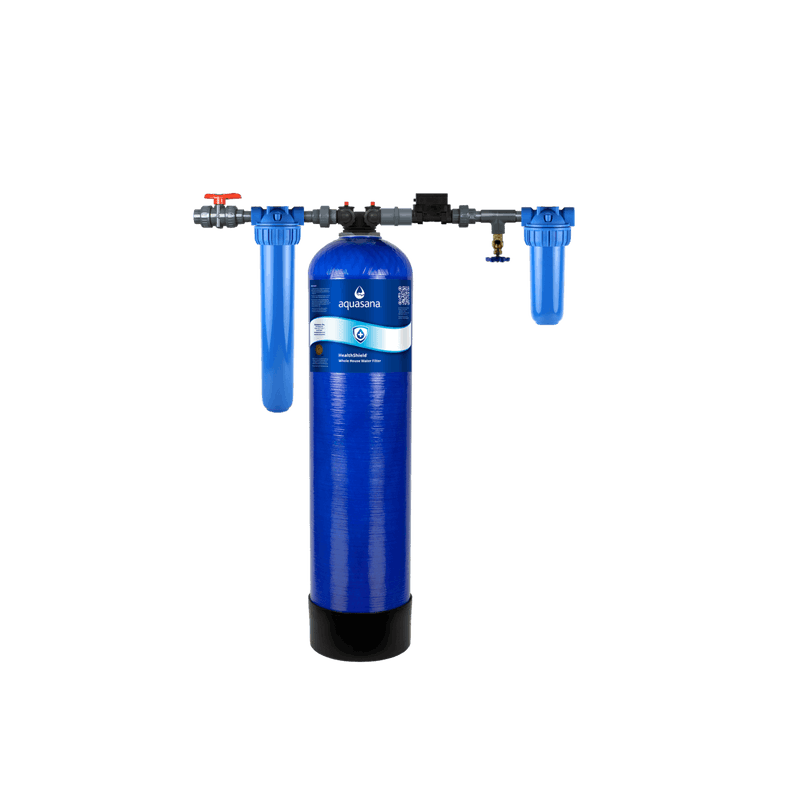
WHOLE HOUSE WATER FILTER
HealthShield™
The first whole home filtration system to reduce up to 99.9% of 61 contaminants including PFAS*, VOCs, pharmaceuticals, chlorine, and chloramines for healthier water from every tap.
Survey Methodology
The findings presented in this article are the result of a March 2026 study of 1,231 U.S. adults, conducted by Aquasana. (Confidence Level: 95%, Margin of Error: 3%)