Common contaminants in school water
Recent testing across the U.S. has uncovered a number of concerning contaminants in school drinking water, from fountains to faucets. These include lead, bacteria and viruses, PFAS chemicals, and even chlorine byproducts. Let’s break each one down:
Lead
Lead contamination in schools is widespread, especially in districts with older plumbing systems. A 2024 study in Texas found that nearly 78% of schools and daycare centers reported at least one tap with detectable lead levels. And Environment America reported that “lead has been detected in the water at schools and preschools across the country.” This is troubling because no level of lead exposure is considered safe, particularly for children, whose developing brains can be harmed even at very low concentrations.
Bacteria and viruses
Contamination from bacteria and viruses, such as coliform bacteria, Legionella, Giardia, and norovirus, can occur when water sits stagnant in pipes or when disinfection practices lapse. The EPA requires monitoring for these microorganisms in drinking water systems, including those supplying schools. While incidents in school water aren’t as widely publicized as lead, aging infrastructure and inconsistent maintenance can create ideal conditions for microbial growth, putting children at risk of gastrointestinal illness or respiratory infections. When schools were taking extra precautions prior to reopening during the COVID-19 pandemic, schools in Ohio and Pennsylvania discovered harmful bacteria in their plumbing.

PFAS
PFAS, widely known as ‘forever chemicals’ — have been detected in schools across the U.S. A tribal school in Minnesota recently had PFAS levels of 160 parts per trillion, which is about 40x higher than proposed federal safety limits. These synthetic compounds don’t break down in the environment and have been linked to health issues including immune suppression, certain cancers, and developmental delays. Studies also suggest that PFAS may spread through school wastewater into local water supplies, highlighting just how persistent and widespread exposure risks can be. Some states, like Maine, have begun actively monitoring PFAS levels in public water systems to better protect schools and surrounding communities.
Chlorine
Most public water systems, including those serving schools, add chlorine or chloramine to kill pathogens. Safe levels are regulated up to 4 ppm per EPA standards. While chlorination is effective in preventing microbial contamination, it can produce disinfection by-products like trihalomethanes (THMs) and haloacetic acids (HAAs), which some studies have linked to increased cancer risk.
Why school water may be unsafe
Even though schools are meant to be safe spaces for learning and growth, the water students drink there isn’t always as safe as it should be. One of the biggest reasons? Aging infrastructure. Many school buildings across the country still rely on plumbing installed decades ago — long before we fully understood the health risks of materials like lead. Old pipes, solder, and fixtures can leach harmful contaminants into the water, especially when water sits stagnant during long breaks.
Another issue is that routine water testing isn’t always required. While some states have their own guidelines, not all schools are federally mandated to test for contaminants like lead or PFAS regularly. And even when testing is done, the results don’t always lead to immediate fixes. Often due to budget limitations or unclear responsibility between school districts and local utilities. Without consistent monitoring and timely maintenance, problems can go unnoticed, putting students at risk of exposure.
Health effects of contaminated school water
When school water contains harmful contaminants like lead, bacteria, or PFAS — the health consequences can be serious, especially for kids. Children are still developing, which makes them more vulnerable to toxins that might not affect adults in the same way. Even low levels of lead, for example, can impact brain development, lower IQ, and contribute to learning and behavioral problems. Exposure to certain bacteria or viruses through water can lead to gastrointestinal illnesses that spread quickly in school environments.
Chemicals like PFAS and disinfection by-products have been linked to long-term health risks, including hormone disruption and certain cancers. While schools are meant to be a safe place to learn and grow, poor water quality can quietly put students at risk. That’s why regular testing, proper filtration, and proactive maintenance are so important.
Parent concern over school water quality
We’ve talked through the risks and findings, but are parents aware that their child’s school water may carry safety risks?

In Aquasana’s 7th Annual Water Quality Survey, we asked parents if they’re concerned about the water quality at their child’s school and found that 66% of parents are concerned. Here’s a breakdown of parent responses to this question over time:
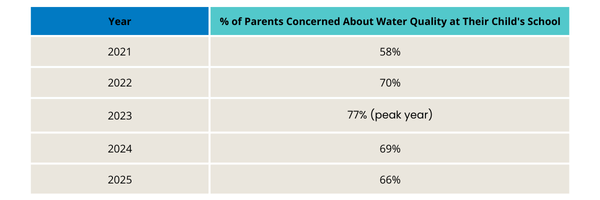
From 2021-2023, concern was increasing each year — but it’s gradually declined since. This could possibly be due to growing public awareness of federal action and assumptions that the issue will be addressed, like the EPA’s revisions to the Lead and Copper Rule had a compliance deadline of Oct 2024. Still, more than half of parents remain concerned, signaling further action is needed.
How to provide children with safer water at school
With inconsistent testing and aging infrastructure, it’s hard to know if your child’s school water is truly safe. While some schools may test regularly, others don’t. Contaminants like lead, PFAS, and chlorine can be difficult to detect without proper monitoring. That uncertainty leaves many families wondering how to protect their children throughout the school day.
One of the simplest and most effective steps is to send your child to school with a reusable bottle filled with filtered water from home. It gives you peace of mind and helps your child avoid relying on water fountains or cafeteria taps that may not be regularly tested or maintained.
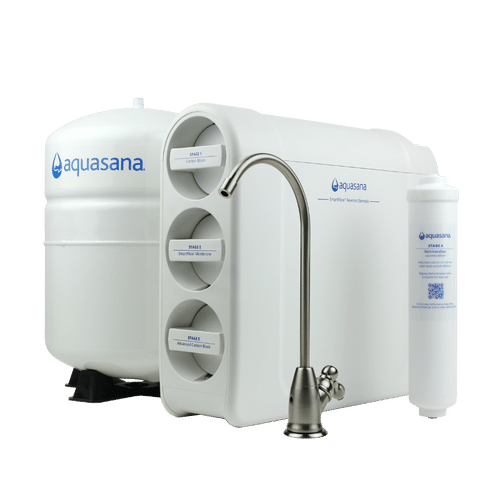
For the highest level of protection, consider using a system like Aquasana’s SmartFlow® Reverse Osmosis, which removes up to 99.99% of 90 contaminants, including lead, PFAS, chlorine, and more. Clean water starts at home, and giving your child access to it all day long is one of the most powerful ways to support their health, focus, and well-being.
UNDER SINK WATER FILTER
SmartFlow® Reverse Osmosis
High-efficiency reverse osmosis system removes up to 99.99% of 90 contaminants, including fluoride, arsenic, chlorine, and lead.